HomeTestsSearchRankProfile

Kepler S Laws Questions

Practice 7 Kepler S Laws questions with detailed answers and explanations. Free MCQs, PYQs, and mock test questions for NEET, JEE, GATE, SSC and more.

๐Ÿ“š
7
Total Questions
๐ŸŸข
1
Easy
๐ŸŸก
4
Medium
๐Ÿ”ด
2
Hard
Practice by Exam:Physics(6)PHYSICS(1)

About Kepler's Laws โ€” practice questions, PYQs & concepts

Kepler's Laws is a frequently-tested topic on Physics, PHYSICS. ExamTest.live currently lists 7 Kepler's Laws questions spanning previous-year papers from 2026 to 2026, each with worked solutions and a step-by-step explanation. Use the filters on this page to focus on a specific exam, difficulty level or year โ€” every answer key is free, no sign-up required.

Kepler's Laws weight in competitive exams

Across our Kepler's Laws question bank, the largest sources are Physics (6) and PHYSICS (1). Click any exam chip above to drill down to that exam-specific question set.

How to use this page

  • Start easy: 1 easy Kepler's Laws questions are available โ€” build fluency before moving up.
  • Target weak years: Use the year filter to focus on the most recent 2026 paper or older PYQs you have not attempted.
  • Time yourself: Every question shows the average solve time so you can benchmark your speed against other students.
  • Read every explanation: Even on questions you got right โ€” the explanation often surfaces a faster approach you can reuse.
All Kepler S Laws Questions(1โ€“7 of 7)

Filter:
Q1hardmcqPhysicsAIEEE 20042026
50% accuracy
Suppose the gravitational force varies inversely as the power of distance. Then the time period of a planet in circular orbit of radius around the sun will be proportional to:
Q2mediummcqPhysicsNEET (UG) 20182026
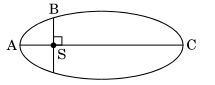
The kinetic energies of a planet in an elliptical orbit about the Sun, at positions A, B and C are and , respectively. AC is the major axis and SB is perpendicular to AC at the position of the Sun S. Position A is closest to the Sun (perihelion) and C is furthest (aphelion). Then:
image
Q3mediummcqPHYSICSNEET 20192026
The time period of a geostationary satellite is at a height ( is the radius of the Earth) from the surface of the earth. The time period of another satellite whose height is from the surface will be:
Q4mediummcqPhysicsPhysics
2% accuracy
The radius of Martian orbit around the Sun is about times the radius of the orbit of Mercury. The Martian year is Earth days. Then which of the following is the length of year on Mercury?
Q5mediummcqPhysicsPhysics
0% accuracy
A planet moving along an elliptical orbit is closest to the sun at a distance and farthest away at a distance of . If and are the linear velocities at these points respectively, then the ratio is:
Q6easymcqPhysicsPhysics
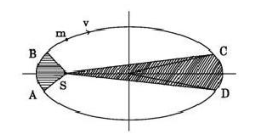
The Figure shows elliptical orbit of a planet about the sun . The shaded area is twice the shaded area . If is the time for the planet to move from to and is the time to move from to then:
image
Q7hardmcqPhysicsPhysics
A geostationary satellite is orbiting the earth at a height of above the surface, being the radius of the earth. The time period of another satellite in hours at a height of from the surface of the earth is:

Frequently Asked Questions

How many Kepler S Laws questions are on ExamTest.live?โ–ผ
We have 7 Kepler S Laws questions spread across 1 pages, covering easy, medium, and hard difficulty levels with detailed explanations.
Are Kepler S Laws MCQs free?โ–ผ
Yes. All Kepler S Laws questions, answers, and explanations on ExamTest.live are completely free. No account or subscription required.
Which exams include Kepler S Laws questions?โ–ผ
Kepler S Laws questions are commonly asked in Physics, PHYSICS. You can filter by exam using the links above.
How do I practice Kepler S Laws questions effectively?โ–ผ
Start with easy questions to build confidence, then tackle medium and hard ones. Use the filter buttons to sort by difficulty. Reveal the answer only after attempting each question, and read the explanation thoroughly.