100% Free
GATE EE 2017 Question Paper (11-Feb-2017) (Shift 2)
Medium 65 Questions 180 min 100 marks
⚡ Live Test Mode Available
Take this as a timed mock test
180 min · 100 marks · Full test mode with leaderboard
Advertisement
Previous Year Questions
65medium5
Questions
0
Attempted
0
Correct
0
Wrong
0/5 attempted
Question No: 61Difficulty: mediumMarks: 2nat
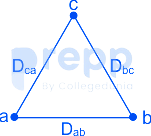
Consider an overhead transmission line with 3-phase, 50 Hz balanced system with conductors located at the vertices of an equilateral triangle of length D = D = D = 1 m as shown in figure below. The resistances of the conductors are neglected. The geometric mean radius (GMR) of each conductor is 0.01 m. Neglecting the effect of ground, the magnitude of positive sequence reactance in Ω/km (rounded off to three decimal places) is _________
Question No: 62Difficulty: mediumMarks: 2nat
A 3-phase, 50 Hz generator supplies power of 3 MW at 17.32 kV to a balanced 3-phase inductive load through an overhead line. The per phase line resistance and reactance are 0.25 Ω and 3.925 Ω respectively. If the voltage at the generator terminal is 17.87 kV, the power factor of the load is ________.
Question No: 63Difficulty: mediumMarks: 2nat
Two generating units rated 300 MW and 400 MW have governor speed regulation of 6% and 4% respectively from no load to full load. Both the generating units are operating in parallel to share a load of 600 MW. Assuming free governor action, the load shared by the larger unit is _________MW.
Question No: 64Difficulty: mediumMarks: 2nat
A 3-phase, 2-pole, 50 Hz, synchronous generator has a rating 250 MVA, 0.8 pf lagging. The kinetic energy of the machine at synchronous speed is 1000 MJ. The machine is running steadily at synchronous speed and delivering 60 MW power at a power angle of 10 electrical degrees. If the load is suddenly removed, assuming the acceleration is constant for 10 cycle, the value of the power angle after 5 cycles is ________ electrical degrees.
Question No: 65Difficulty: mediumMarks: 2nat
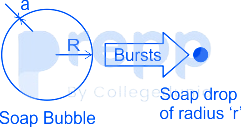
A thin soap bubble of radius, R = 1 cm and thickness a = 3.3 μm (a ≪ R), is at a potential of 1 V with respect to a reference point at infinity. The bubble bursts and becomes a single spherical drop of soap (assuming all the soap is contained in the drop) of radius r. The volume of the soap in the thin bubble is 4πR²a and that of the drop is . The potential in volts, of the resulting single spherical drop with respect to the same reference point at infinity is ________. (Give the answer up to two decimal places.)
✓ Showing questions 61–65 of 65 — use the page buttons below to practice the rest
You May Also Like
📊 Track Your Progress
Know exactly where you stand
Save scores, track weak topics, compare with toppers — all free.
Advertisement