Chemistry
Thermodynamics Questions
35 Thermodynamics questions from Chemistry with detailed answers and explanations. Free previous year questions and MCQs.
📚
35
Questions
🟢
5
Easy
🟡
27
Medium
🔴
3
Hard
Thermodynamics — Chemistry(1–35 of 35)
Filter:
. Which of the following diagrams gives an accurate representation of the above reaction? [ reactants; products]
Which of the following is correct option for free expansion of an ideal gas under adiabatic condition?
If the enthalpy change for the transition of liquid water to steam is at , the entropy change for the process would be:
If the for a given reaction has a negative value, then which of the following gives the correct relationships for the values of and ?
Enthalpy change for the reaction is . The dissociation energy of bond is:
Standard enthalpy of vapourisation for water at is . The internal energy of vapourisation of water at (in ) is:
Equal volumes of two monoatomic gases, and , at same temperature and pressure are mixed. The ratio of specific heats () of the mixture will be:
The enthalpy of fusion of water is . The molar entropy change for the melting of ice at is:
In which of the following reactions, standard reaction entropy change () is positive and standard Gibb’s energy change () decreases sharply with increasing temperature?
For an endothermic reaction, energy of activation is and enthalpy of reaction is (both of these in ). The minimum value of will be:
A reaction having equal energies of activation for forward and reverse reactions has:
Using the Gibbs energy change, , for the reaction:
The of in water at is: ()
The of in water at is: ()
The formation of the oxide ion, , from oxygen atom requires first an exothermic and then an endothermic step as shown below: Thus the process of formation of in gas phase is unfavourable though is isoelectronic with neon. It is due to the fact that:
The heat of combustion of carbon to is . The heat released upon formation of of from carbon and oxygen gas is:
The correct thermodynamic conditions for the spontaneous reaction at all temperatures is:
Consider the following liquid – vapour equilibrium: . Which of the following relations is correct?
For a sample of perfect gas when its pressure is changed isothermally from to , the entropy change is given by:
Consider the following reactions:(i) , (ii) , (iii) , (iv) , The enthalpy of formation of is:
For the reaction of one mole of zinc dust with one mole of sulphuric acid in a bomb calorimeter, and corresponds to:
For the chemical equilibrium, , can be determined from which one of the following plots?
Identify the correct statement for change of Gibbs energy for a system () at constant temperature and pressure:
Assume each reaction is carried out in an open container. For which reaction will ?
The enthalpy and entropy change for the reaction: Are and respectively. The temperature at which the reaction will be in equilibrium is:
The enthalpy of combustion of , cyclohexene () and cyclohexane () are -241, -3800 and -3920 kJ per mol respectively. Heat of hydrogenation of cyclohexene is :
In which of the following the hydration energy is higher than the lattice energy?
Given that bond energy of and is and respectively and for is . The bond enthalpy of is:
Bond dissociation enthalpy of , and are , and respectively. Enthalpy of formation of is:
For the gas phase reaction , which of the following conditions is correct?
The values of and for the reaction are and respectively. This reaction will be spontaneous at:
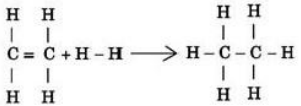 will be:
Chemistry Thermodynamics — FAQ
How many Thermodynamics questions come in Chemistry?▼
Our database has 35 Thermodynamics questions from Chemistry.
What difficulty are Chemistry Thermodynamics questions?▼
The 35 Chemistry Thermodynamics questions include 5 easy, 27 medium and 3 hard level questions.
Where can I find more Thermodynamics questions for other exams?▼
Visit /tag/thermodynamics to see all Thermodynamics questions across all exams including Physics, AIEEE, AIEEE 2004.