AIEEE
Organic Chemistry Questions
100 Organic Chemistry questions from AIEEE with detailed answers and explanations. Free previous year questions and MCQs.
📚
100
Questions
🟢
20
Easy
🟡
72
Medium
🔴
8
Hard
Years:2026 (100)
Organic Chemistry — AIEEE(1–100 of 100)
Filter:
Which one of the following methods is neither meant for the synthesis nor for separation of amines?
Tertiary alkyl halides are practically inert to substitution by mechanism because of:
Reaction of one molecule of with one molecule of -butadiene at gives predominantly:
Reaction of cyclohexanone with dimethylamine in the presence of catalytic amount of an acid forms a compound if water during the reaction is continuously removed. The compound formed is generally known as:
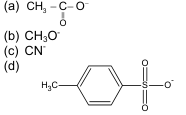
The decreasing order of nucleophilicity among the following nucleophiles is:
Acid catalyzed hydration of alkenes except ethene leads to the formation of:
-methylbutane on reacting with bromine in the presence of sunlight gives mainly:
An organic compound having molecular mass contains , and rest Oxygen. On heating, it gives along with a solid residue that gives a violet color with alkaline copper sulfate. The compound is:
Alkyl halides react with dialkyl copper reagents (Gilman reagents) to give:
The best reagent to convert pent- -en- -ol into pent- -en- -one is:
Of the five isomeric hexanes, the isomer which can give only two monochlorinated compounds is:
Elimination of bromine from -bromobutane results in the formation of:
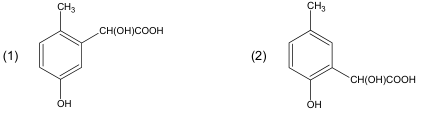
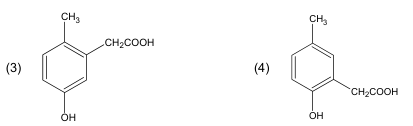
p-cresol reacts with chloroform in alkaline medium to give compound A, which adds to form compound B. The latter on acidic hydrolysis gives a chiral carboxylic acid. The structure of this carboxylic acid is:
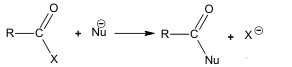 is fastest when
 . The decreasing order of the rate of the above reaction with nucleophiles () A to D is:
The structure of the compound that gives a tribromo derivative on treatment with bromine water is:
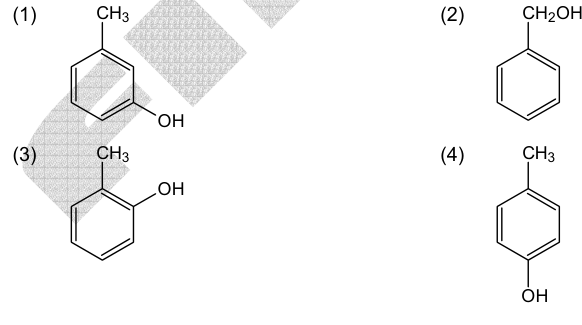
Which one of the following is the strongest base in aqueous solution?
The correct order of increasing acid strength of the compounds:(a) (b) (c) (d) (Isopropyl acetic acid)
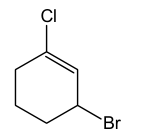
The increasing order of the rate of addition to compounds A – D is:(A) (B) (C) (D)
Among the following, the one that gives positive iodoform test upon reaction with and is:
The alkene formed as a major product in the elimination reaction of a quaternary ammonium hydroxide (Hofmann elimination) is:[Image showing N-ethyl-N,N-dimethylbutan-1-aminium hydroxide heated]
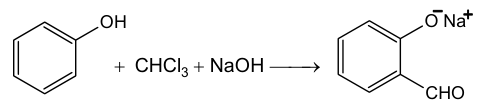
reacts with under anhydrous conditions at room temperature to give:
Reaction of trans-2-phenyl-1-bromocyclopentane with alcoholic produces:
The increasing order of stability of the following free radicals is:
The structure of the major product formed in the following reaction is:
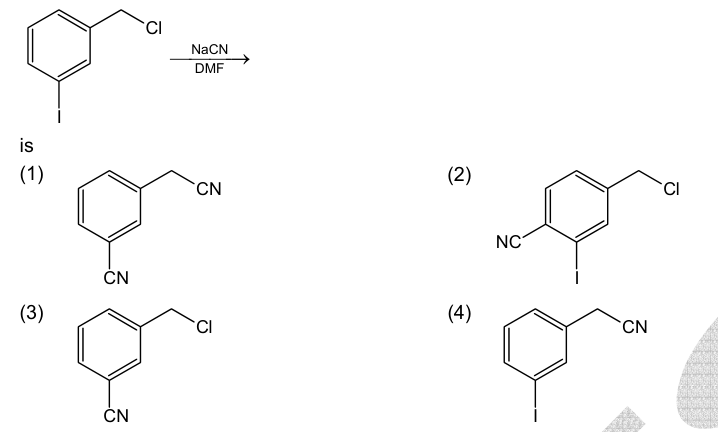
In the following sequence of reactions, , the compound 'D' is:
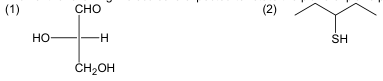
Which of the following molecules is expected to rotate the plane of plane polarized light?

The reaction of toluene with in presence of gives predominantly:
Which one of the following conformations of cyclohexane is chiral?
Increasing order of stability among the three main conformations (i.e. Eclipse, Anti, Gauche) of 2-fluoroethanol is:
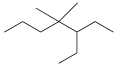 is:
is:In the chemical reaction, , the compound and are respectively:
The compound formed as a result of oxidation of ethyl benzene by is:
The organic chloro compound which shows complete stereochemical inversion during a reaction is:
Phenol, when it first reacts with concentrated sulphuric acid and then with concentrated nitric acid, gives:
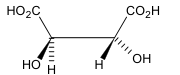
The correct decreasing order of priority for the functional groups of organic compounds in the IUPAC system of nomenclature is:
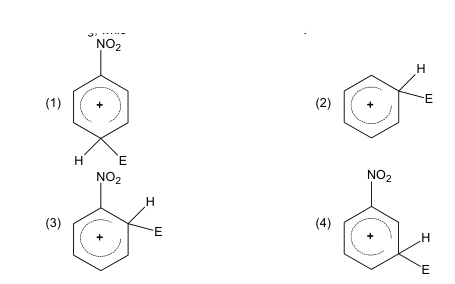
The electrophile, , attacks the benzene ring to generate the intermediate -complex. Of the following, which -complex is of lowest energy?
Which of the following on heating with aqueous , produces acetaldehyde?
Arrange the carbanions, , , , , in order of their decreasing stability:
The number of stereoisomers possible for a compound of the molecular formula is:
Toluene is nitrated and the resulting product is reduced with tin and hydrochloric acid. The product so obtained is diazotized and then heated with cuprous bromide. The reaction mixture so formed contains:
Acetyl bromide reacts with an excess of followed by treatment with a saturated solution of to give:
In the following sequence of reactions, the alkene affords the compound ‘B’:
The compound B is:
The compound B is:
Amongst the following compounds, the optically active alkane having the lowest molecular mass is:
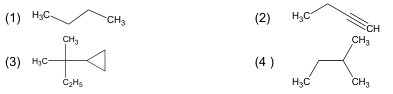
In the chemical reactions, 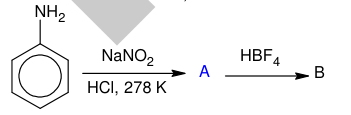 the compounds 'A' and 'B' respectively are:
the compounds 'A' and 'B' respectively are: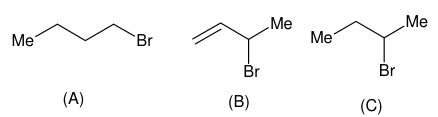
A liquid was mixed with ethanol and a drop of concentrated was added. A compound with a fruity smell was formed. The liquid was:
For which of the following parameters would the structural isomers and be expected to have the same values? (Assume ideal behavior)
of an organic compound containing nitrogen was digested according to Kjeldahl’s method and the evolved ammonia was absorbed in of solution. The excess of the acid required of solution for complete neutralization. The percentage of nitrogen in the compound is:
The major product obtained on interaction of phenol with sodium hydroxide and carbon dioxide is:
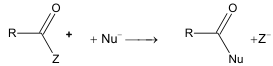 is fastest when
 Trichloroacetaldehyde was subjected to Cannizzaro's reaction by using . The mixture of the products contains sodium trichloroacetate and another compound. The other compound is:
Silver Mirror test is given by which one of the following compounds?
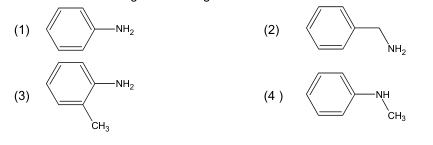
Sodium ethoxide has reacted with ethanoyl chloride. The compound that is produced in the above reaction is:
 :
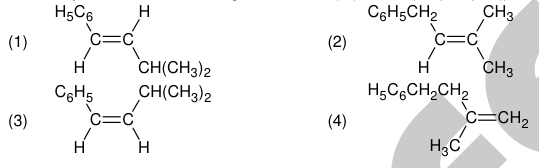
:
The strongest acid amongst the following compounds is:
Which of the following reagents may be used to distinguish between phenol and benzoic acid?
The compound formed in the positive test for nitrogen with the Lassaigne solution of an organic compound is:
Phenol is heated with a solution of mixture of and . The major product obtained in the above reaction is:
Ortho-Nitrophenol is less soluble in water than p- and m- Nitrophenols because:
Ozonolysis of an organic compound gives formaldehyde as one of the products. This confirms the presence of:
The compound formed on heating chlorobenzene with chloral in the presence of concentrated sulphuric acid is:
Which branched chain isomer of the hydrocarbon with molecular mass gives only one isomer of mono substituted alkyl halide?
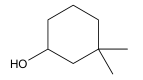
How many chiral compounds are possible on monochlorination of 2-methylbutane?
In the transformation of 4-hydroxy-2-butanone to 4-hydroxybutane (reduction of carbonyl to methylene), which of the following is the most appropriate reagent?
Consider the acidity of the following carboxylic acids:
(1)
(2)
(3)
(4)
Which one is the most acidic?
(1)
(2)
(3)
(4)
Which one is the most acidic?
The ammonia evolved from the treatment of of an organic compound for the estimation of nitrogen was passed in of sulphuric acid. The excess of acid required of sodium hydroxide solution for complete neutralization. The organic compound is:
Among the following compounds, which can be dehydrated very easily?
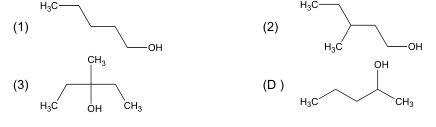
On mixing ethyl acetate with aqueous sodium chloride, the composition of the resultant solution is:
Which of the following undergoes a reaction with sodium hydroxide solution to give the corresponding alcohol and acid?
Which one of the following is reduced with zinc and hydrochloric acid to give the corresponding hydrocarbon?
AIEEE Organic Chemistry — FAQ
How many Organic Chemistry questions come in AIEEE?▼
Our database has 100 Organic Chemistry questions from AIEEE covering 2026 to 2026.
What difficulty are AIEEE Organic Chemistry questions?▼
The 100 AIEEE Organic Chemistry questions include 20 easy, 72 medium and 8 hard level questions.
Where can I find more Organic Chemistry questions for other exams?▼
Visit /tag/organic-chemistry to see all Organic Chemistry questions across all exams including Chemistry, NEET 2019, AIEEE 2004.